PARANORMAL MUSINGS

JANUARY :: We share more of our favourite haunted locations, further frightening experiences, and some possible fascinating evidence of the paranormal.
Showing posts with label life after death. Show all posts

Friday, 2 January 2015

Favourite Haunts :: Ghostly Spectres at Oxford Castle


St George's Tower, Oxford Castle
© Ghost & Girl

But, soft; behold! lo, where it comes again!
I'll cross it, though it blast me.—Stay, illusion!
If thou hast any sound, or use of voice,
Speak to me...

- William Shakespeare (Hamlet)


Oxford Castle: Famous for many reasons, but the Black Assize is what comes immediately to mind.
 
It was the year 1577, and England was divided by the Reformation. Rowlande Jenkes, a Roman Catholic bookseller, was brought before the assize court for being 'saucy and foul mouthed'. When the verdict was given, and it was ordered that he should lose his ears, Jenkes cursed the court, jury and city.
 
Oddly, townsfolk began to drop like flies shortly after. The dead included two Judges, the Coroner, the Sheriff, a clerk and many members of the court and jury. As no women, children or the town's poor befell the illness, it was rumoured that Jenkes used black magic to bring about the deaths. However, the contemporary opinion is that it was probably an outbreak of Gaol Fever, and due to the close proximity and heat within the courthouse it had spread like wildfire.

Oxford Castle is an important example of a motte and bailey castle. The history of the castle is well documented as it played a key role in the history and development of Oxford itself. The motte survives well and contains a rare well chamber as well as the archaeological remains from the stone keep built on it.

It is one of only two surviving towers within the city of Oxford. After the Civil War, the castle, like many town castles around England, was converted for use as a prison, a purpose it served until 1996 when it was closed due to its unsanitary conditions.

The most dramatic moment in the military history of Oxford Castle was in 1142, at the height of the Civil War between King Stephen and Empress Matilda. The Empress' army was besieged within the castle, and it seemed that surrender was imminent. Legend has it that the Empress was lowered over the castle walls in the dead of night, wrapped in a white cloak so as to camouflage against the snow. She crept through King Stephen's camp and across the frozen Thames to safety.  

Oxford Castle Unlocked is a truly unique tour experience. On a bitterly cold December morning, we were greeted at the entrance by the truly terrifying Executioner, who led us directly into St George's Tower where our tour began.


Julia Ann Crumpling, Oxford Castle
© Ghost & Girl
Whilst hearing grisly tales of its previous occupants, we then proceeded to climb the steep Saxon tower. As we stepped into the "water tank" room, I sensed a male presence towards the right end corner. Our tour guide then explained that the room was supposedly haunted, but never mentioned as to whom, or what might be haunting it, nor of any reported experiences associated with the room.
Next we were shown into the crypt, which lies beneath St George's Tower. The crypt is thought to date back to the Saxons, making it the oldest standing structure in England. It is within this crypt that the Executioner proceeded to tell us about the spirit of a little girl, who is most often felt by women. The girl, a former inmate of the Victorian prison, is thought to be Julia Ann Crumpling. She was only seven years old when she was sentenced to seven days hard labour for the crime of stealing a pram.
 
Julia is reported to have been seen throughout the prison. She likes to place her hand in visitor's hands, and tug on their clothing. She is  also often seen weeping in the crypt, asking for her mother. 

The crypt is also haunted by a monk known as Bernard. Visitors often report feeling a heaviness in the air, a hand on their shoulder, hair being tugged, and even the smell of beer.

We then walked onto D-wing, part of the later prison built in the eighteenth century. Here  our tour guide 'processed us' (mug shots and all!), allowing us to be admitted to the prison. We were then free to  take in the atmosphere and read up on prison history from the displays, or return to any part of the castle to explore further on our own.

As there were still no other visitors about, I decided to head back down to the crypt to take some photos. Whilst with the tour, I felt quite at peace within the crypt, but as I ventured back on my own the atmosphere seemed to change, and I found myself constantly looking over my shoulder. I was fighting with the voice inside my head and the flight instinct that were telling me to high tail it back up to the prison where the rest of my family were.
 
But I stuck it out, and I took the photos I'd gone there for, using my iPhone5 (no flash).

It was a few days after the tour that I finally had the opportunity to review the photos I'd taken that day at Oxford Castle. It was this photo (below), that I took in the passage between the crypt and the lower prison, which has left me with more questions than answers. 
 
Do you see what I see?
Passage between the crypt and the lower prison at Oxford Castle.
Original photograph. No filter. No edits.
© Ghost & Girl

Every single photo that I took prior to this one does not share the same anomaly, nor anything like it. I have shown the photo to several friends - some keen on the paranormal, others not - asking what they see. Each can make out the same image as I: A women dressed in a high-waisted skirt and white blouse. Her hair is parted in the middle, and it appears as though she is leaning over the railing, her gaze directly on me as I took the picture.

I'm the first to admit that this image may be no more than pareidolia (matrixing), brought about by the construction of the stonework, the angle of the light, or a combination of both.
 
And yet, this is the only photograph in which I can see her. I'll leave it to you to draw your own conclusion.

Close up: A ghostly encounter or no?
© Ghost & Girl


Have I captured one of the ghostly spectres of Oxford Castle, or is my mind merely playing tricks?


For more information on Oxford Castle, visit these websites:
 
 
To learn more about pareidolia, try this link:
 

Thursday, 20 November 2014

Danger & Death in Las Vegas :: Guest post by author Rae Gee

© Rae Gee
www.raegee.co.uk
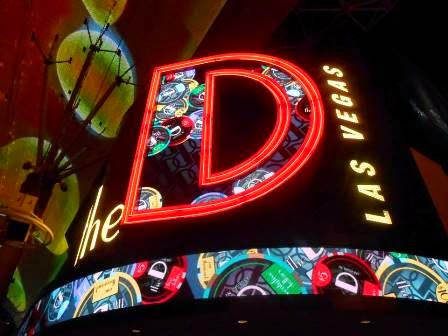
Las Vegas: The place you visit to lose your inhibitions and, if you're unlucky, your cash as well.
 
It's not a city where you'd expect to find spirits of the non-alcoholic variety. But this oasis in the desert was built on mob money. And, with that money, came the mob's rules on how the city was run. Urban legends abound of mob debtors buried in the foundations of casinos. Bodies have been discovered buried in the desert.
 
Las Vegas also holds one record that no city wants to have associated with it. It's the suicide capital of the USA with 19 suicides per 100,000 people (the national average is around 12 per 100,000 people). Some of these sad deaths are in relation to the local economy while others have been visitors who've discovered the anonymity Vegas offers is the place for them to spend their final moments.
 
Because of this, Vegas appears to be a hot bed of ghostly activity. Some of the city's most famous residents are still said to haunt their old... haunts. Benjamin “Bugsy” Siegel, one of Vegas's most infamous mobsters, is still said to reside in the Flamingo, while flamboyant pianist Liberace is apparently still at his old restaurant, Tivoli Gardens. Houdini and Elvis (obviously!) also appear to have found their forever homes in the heart of Las Vegas. 
 
I had my own paranormal experiences while visiting Las Vegas.
 
© Rae Gee
www.raegee.co.uk
Staying on the 25th floor of the Luxor pyramid was unique in more ways than one. The rooms open out onto the hotel's massive atrium, giving a bird's eye view of the food court, check in desks, and entrance. It wasn't uncommon to encounter non-Luxor guests in the elevators, all of them going to the upper floors to take in the view. Music echoes through the large space which, by day, is lit by bright lights. By night, the lights are dimmed a little, giving a more ethereal feeling to one of the largest pyramids outside of Egypt.
 
I'll admit now that the Luxor is the hotel I've always wanted to stay at. Ever since I started dreaming of Vegas back in the late 1990s, the hotel I saw myself at was the black pyramid of the Las Vegas Strip. So when I had the chance to visit with friends, it was almost like a prophecy when they told me where we'd be staying.
 
And while it was a lot of fun to meet up with my earthly friends, what was equally interesting were the friends I made in other realms. One in particular stands out and I noticed them on the second day I was there.
 
When I exited the elevator, I hung a left and walked along one of the hallways that overlooked the atrium before taking another left to my room. On this particular morning, I was returning from the pool. As I stepped out onto the first corridor, I saw something fall into step beside me. The dark shadow caused me to stall before I began walking again. It felt female and never did I feel threatened by it. Instead, the being had a sense of wistful happiness, as though it was now free to spend the rest of its days in a place it had loved.
 
© Rae Gee
www.raegee.co.uk
Upon my return to the UK, I spent time researching deaths at the Luxor hotel. Surprisingly, only two people have ever jumped from the open corridors and down in to the atrium (the hotel has seen no need to fit plexi-glass atop the four foot walls that separate people from the immense space beyond them). One of them was a man. And the other was, reportedly, a lady of the night who'd contracted HIV. She took her own life because of her illness and sadly crashed into the buffet. Because of the disease in her bloodstream, the hotel tore down the buffet and replaced it with the food court.
 
She jumped from the 26th floor, the floor above my own.
 
Needless to say, I felt comforted by her presence and I'm glad I was able to make contact on some level. One day I hope to go back and have a proper meeting with her.
 
Las Vegas hosts a haunted tour (which I hope to take the next time I'm there). You can find it here.

Rae Gee 

[Rae Gee is the author of the Veetu Industries series of LGBT steampunk novels, published by Torquere Press. To find out more about Rae Gee and her books, visit www.raegee.co.uk, her Facebook page, or follow her on Twitter.]


Monday, 10 November 2014

Favourite Haunts :: A Sea of Ghosts on Kangaroo Island (Karta)

Land of the Dead: Kangaroo Island, South Australia
© Ghost & Girl
"Ngurunderi’s final act on earth was to leave instructions for his people, that after death, they should follow his steps to the western end of Kangaroo Island.  There he leapt from a pile of rocks into the sea, where he drowned, but his cleansed spirit rose to the sky, to await the arrival of his descendants."
~ Ngurunderi's Final Action, Ngarrindjeri Dreaming
 
 
South Australia's Kangaroo Island lies 112km south-west of the city of Adelaide, and is Australia's third largest island. Today it is inhabited by around 4000 people, most of whom live on the east coast of the island, closest to the mainland. Over half the island is national parks and protected wilderness areas, and the largest of these are found on the island's western end.
 
The island has been inhabited by Europeans since the early 19th Century. It was sealers, escaped convicts, and awol sailors who first took up casual residency on the island. These were rough, uncouth men, infamous for kidnapping Aboriginal women from Tasmania and the South Australian mainland, to keep as slaves. A number of these women died in their attempts to cross the unforgiving waters surrounding the island to return to their people. Only one woman is known to have survived the journey.
 
When the island was first occupied by Europeans, they found it uninhabited by Aborigines. However, the presence of Indigenous Australians on the island is undisputed: There is archaeological evidence that suggests Aboriginal people occupied the island as recently as 2000 years ago, but their history on the island stretches back at least 16,000 years. Why the indigenous population chose to leave the island remains a mystery; however, the Aboriginal groups on the mainland refer to Kangaroo Island as "Karta", which means "Land of the Dead", the stories of which is reflected in their Dreaming.
 
For example, the Ngarrindjeri people regard the island as the place to which the spirit travels after death, where it meets with the ancestral spirits for the final journey into heaven. The Ramindjeri also refer to the island as being the "gateway to star heaven in the Milky Way". It is also said that the ghost of a Ramindjeri woman makes her presence known by appearing to people on the island in the form of a small, native bird.
 
Weir's Cove, Cape du Couedic, Kangaroo Island
© Ghost & Girl
The island was settled by the British as part of the Colony of South Australia, with the first ship of free settlers arriving at Reeves Point on 27 July 1836. However, a shortage of fresh water and suitable materials for building saw the settlement moved to the mainland less than four years later.
 
The waters surrounding Kangaroo Island are notoriously treacherous. The island has four lighthouses, all still in operation: Cape Willoughby (1852), Cape Borda (1858), Cape du Couedic (1906), and Cape St Albans (1908). Destructive cliffs make up most of the island's coastline, and the lighthouses have been integral to the safe passage of ships in and around the island for more than 160 years.
 
Kangaroo Island is infamous for its shipwrecks, with the west coast of the island being particularly unforgiving. One tragedy is that of the Loch Vennachar, which sailed into cliffs off remote West Bay in 1905. All 27 crew on board perished, and only the remains of one sailor was eventually washed ashore, later buried in the silver-grey sand-dunes of the bay.
 
The island presented a difficult, and sometimes tragic way of life for its inhabitants, too. The island's lighthouse keepers and their families were completely isolated, not just from the mainland, but for a long time there were no roads connecting the lighthouses to the rest of the island. At Cape Borda and Cape du Couedic, supplies were brought in by ship and hauled up the cliff-edge at Harvey's Return and Weir's Cove respectively. Sailors, light-keeper's and their family members make up the island's early dead, the magnitude of which can been seen in cemeteries like that found at Harvey's Return near Cape Borda.
 
Cottages at Cape du Couedic, Kangaroo Island
© Ghost & Girl
If you believe the reports, it seems that some of these dead continue to wander their island home. The old light-keeper's cottages at Cape Borda are now rented out to visitors as self-contained accommodation, and many who stay report ghostly happenings, which includes the apparition of a small girl in and around the cottages themselves.
 
The visitor books at Cape du Couedic report similar ghostly activity in and around the old cottages. An "old man" is frequently reported, as are countless tales of strange, unexplained sounds and lights coming from within the cottages, including those that should be empty, and the unshakable, eerie sensation that one is never quite alone, no matter where on the Cape one finds themselves.
 
It was far too easy for me to relate to this unfathomable sensation of being watched during my own stay at Cape du Couedic. The three charming light-keeper's cottages are set in behind a rise that provides suitable protection from the winds that roar in over the cape, with the lighthouse a short stroll to the top. Renting one of the assistant keeper's cottages in the off-season meant that we were the only two people for miles, surrounded by windblown scrubland on one side, and the brutal mass of the Southern Ocean on the other.
 
We arrived at the Cape just on sunset. The blinds on the cottage windows were all drawn, and the place appeared to be completely uninhabited - by the living, at least. But from the moment we stepped out of our car and made our way to the cottage entrance, it became undeniable that our first impression of the cape as uninhabited wasn't entirely accurate.
 
I was completely restless the entire first evening of our stay. Inside the cottage, it felt as though we were constantly watched. I know it sounds terribly cliché, but this sensation was so intense that it made the hairs on the back of my neck remain permanently raised, as if something was hovering just behind me, deliberately staying out of sight. Whenever I looked up, or turned around, or walked out of one room and into another, I could not escape the feeling that at any moment I would find a stranger staring at me from within the shadows.
 
Then on the first night, not long after I had dozed off, I was woken suddenly by what I thought was someone whispering in my ear: "My name is John..."
 
I live in an old, stone house, and am therefore familiar with the sounds that old, stone houses make in the night: The pop and crack of the roof and floorboards as the house cools; the knocking of the stones and the rattle of sash windows and doors as it shifts and settles; the howl of the wind as it makes it way down the chimneys. And for the first two nights at Cape du Couedic, the wind howled and the sea crashed in a way that only the Southern Ocean is capable of, and all the noises we heard during those two nights we could confidently say were nothing more than the normal sounds that an old stone cottage makes during nights of wild weather.
 
On the third night, though, we were blessed with perfect calm. The eerie sensation of being watched and followed had abated, and we found ourselves quite comfortable within the walls of the old assistant keeper's cottage. It made for an undisturbed sleep.
 
Remarkable Rocks, Kangaroo Island
© Ghost & Girl
However, in the early hours of that last morning, before the sun had even peaked above the horizon, I woke from my slumber, unmoving, but fully awake and alert. Outside it was perfectly still, not even the sound of a bird could be heard. And then, just as it had been reported countless times in the visitor books, there came the sound of movement from the other end of the corridor outside the bedroom: A shuffling, thumping and tapping, the distinct sounds of someone pulling on boots, followed by footsteps proceeding down the hallway to the front door, first becoming louder at their approach, before gently fading away.
 
The tales of the ghosts of Cape du Couedic do not reveal, nor even hazard a guess at the identity of the spirit whose footsteps are so regularly heard making their way down the hallway in the cottage. I like to think that it is one of the old assistant light-keepers making his early-morning check of the lighthouse.
 
Whilst it's easy to make assumptions, it's more difficult to confirm if any of the assistant light-keeper's stationed at Cape du Couedic, and resident of the same cottage, were actually named John. It'd be a neat coincidence if there was, though.
 
 
Want to know more about Kangaroo Island (Karta)? Try these links:


Thursday, 30 October 2014

Making the Paranormal Normal :: Halloween as a Ritual of Inversion - An Australian Perspective

© Ghost & Girl
"For a while, we pull these fearful and painful realities into a relatively contained and public context. We share them with our children. We create a special and safe moment during which danger and death, skeletons and strangers can safely be part of our existence...Halloween reverses the usual order of many things in many ways". ~ Ken C. Erikson, Anthropologist
 
 
Here's the deal: I have never celebrated or participated in Halloween. Ever. I can muse about ghosts, and theorise about life after death, but Halloween presents me with a difficulty: How does one write about something one has no experience of?
 
You see, in southern Australia (where I have lived all my life), October is spring. Here the days are getting longer and warmer. It hasn't rained solidly in at least two months. The ground is dry, the grass is beginning to crunch underfoot, and the plants are finishing their spring bloom in preparation for summer shut-down.
 
October 31 in Australia bears no relevance to the ancient Celtic calendar that brought about Samhain, which lead to All Hallow's Eve and, in time, Halloween. In Australia, the first day of November marks the beginning of summer: Beltane. If Australians wanted to be serious about Halloween and keep in line with its history and traditions, then the reality is that it would need to be celebrated not in October, as it is in the Northern Hemisphere, but on the Southern Hemisphere's Samhain, which falls on April 30.
 
There is limited information as to why Australia, despite its shared cultural and religious history with Europe and the Americas, never adopted the tradition of Halloween. There are suggestions, however, that the seasonal differences may have played a major part, or perhaps the religious influences at the time of settlement had something to do with it as well. It might even be that the arduous life of a settler (whether a free one or not) simply couldn't accommodate the traditions of the Old Country.
 
However, whatever the reasons for its initial absence from the Australian calendar - an absence that existed for more than two hundred years, I might add - in recent times, Halloween has been creeping its way into our lives.
 
Or, at least, into our supermarkets and department stores.
 
The arrival of Halloween to Australian shores is the result of clever marketing techniques from the big-brand, American-owned companies that influence all our purchasing habits. But despite this, the introduction of Halloween might be just what Australia needs.
 
In the past decade or so, Halloween has become a thing in Australia. People throw costume parties and children go trick-or-treating in their neighbourhoods. I was surprised to learn during my own investigations (read: intense questioning of local residents), that even in a small town situated on the edge of the desert, Halloween has been the thing to do for the past fifteen years. And not only that, but with each passing year it gets bigger and better, with more people becoming involved.
 
But don't think for a minute that this is your typical, Northern Hemisphere Halloween event. There's no history behind the existence of Halloween in Australia. It's only cultural influence is American pop-culture.
 
So, why then do we do it, if we have no seasonal, cultural or historical ties to the tradition?
 
I asked this question of a parent whose two teenage daughters have dressed-up and gone trick-or-treating for the past ten years. Her response was this:
 
"You'd think it'd be about the candy, but it's not. It's about the make-believe, about being a kid. It's the experience of it that has them wanting to do it again, year in and year out, no matter how old they get".
 
When I first decided that I would write this post, I wanted to write about Halloween as a ritual of inversion. A ritual of inversion (or reversal, as it is sometimes referred) is an event that permits people to participate in something that goes against the accepted norms of one's society.
 
Halloween is the time of year when it is okay, in fact acceptable for people to dabble in danger and death. It's the time when ghost stories are encouraged rather than scoffed at; when monsters and strange events become the topic of conversation; when one can dress up as a mythical creature without ridicule; and when all the things that make up the paranormal become the normal. All those things we'd rather not think about, let alone discuss or participate in at any other time of the year, become accepted practice during Halloween.
 
This is what makes Halloween a ritual of inversion, and perhaps it is the reason why Australians seem willing to adopt it and make it a part of their annual calendar. There was nothing like it before. When I was growing up, one didn't talk about death, or ghosts, or monsters. It was either taboo, or didn't exist. Now children make up songs about ghosts on their way to school in the morning, and choose out costumes for trick-or-treating, and attempt to scare each other silly with the scariest story they can come up with. 
 
And since it's Halloween, that's perfectly okay.
 
From an Australian perspective, Halloween presents one with the perfect excuse to become involved in the paranormal. Australia needs Halloween, simply because it is a ritual of inversion. It's cultural influences, and even its seasonal irrelevance seem unimportant in light of the fact that Halloween acts as a social pressure-release valve.
 
That is, Halloween makes it okay to talk about and participate in those things that might otherwise raise eyebrows; to celebrate not only the make-believe, but shared experience with death - and what comes after it.


Sunday, 28 September 2014

It's in the Cards :: Revealing Past Life Memories

Is it in the cards? Using Tarot as a past-life tool
© Ghost & Girl
 "I do not set my life at a pin's fee;
And, for my soul, what can it do to that,
Being a thing immortal as itself?"
 ~ William Shakespeare (Hamlet)
 
 
Ghost hunting and past life regression share a common purpose: To find evidence of life after death, and to prove the immortality of the soul. 

As our collective interest in the paranormal has grown, so too has our curiousity about reincarnation and past lives. If one already believes that the soul lives on after death, then it doesn't seem too much of a stretch to believe that that soul may occupy many vessels over the course of time. 
 
But if we have all lived before, why don't we know about it? Why is it that with rebirth our past life memories are mostly forgotten, and what can we do about it to get them back?

There is a lot of information out there (and by "out there" I mean on the internet, obviously) on reincarnation and past life regression, most of it based purely in faith, and completely untested, of course (at least objectively). As our last post pointed out, even the undertaking of "accepted" methods of regression such as hypnotherapy can lead to only further questions being raised about the nature of past lives and our ability to remember them (assuming, of course, they're the real deal in the first place). 

Hypnotherapy is probably the most popular method of past life regression. It places the participant in a transient state of consciousness through which they are able to unlock and reveal the so-called memories of past life experiences.
 
But not everyone has access to credible, affordable professionals. So, in lieu of hypnotherapy, what other options are available to the rest of us for obtaining information about a past life?

Past life memories are not relegated to just the deepest, furthest recesses of our mind, if the literature on the topic is to be believed. Past life memories can be unconscious, such as rampant dislikes that have no apparent source; physical, such as becoming ill as a result of certain tastes and smells; intense emotional reactions to people, places and events that have no explanation; certain dream events; and "spontaneous recall", a deja vu, or other trigger event that throws one into reliving their past life.

Many of these memories are uncontrollable; for example, one cannot control when a spontaneous recall might happen. Besides hypnotherapy, lucid dreaming and meditation are offered up as alternatives for people seeking to discover the memories of their past lives.
 
Reading past lives is also considered one of the "hidden teachings" of the Tarot. I have been using Tarot as a decision-making tool for almost a decade. I read only for myself. Tarot is a means by which I am able to clear my mind and focus on the problem at hand, the cards suggesting the choice I should make. I then have the option to follow the cards, or not.

Past Life Spread: Eight cards laid out in succession in
a single column, with cards four and five crossed in the centre
© Ghost & Girl
I have never before used Tarot as a means to discover a past life. Since I simply do not have the time, nor the patience for lucid dreaming and/or meditation, and because I keep a Tarot deck handy and was curious to see what it might say, I did it - just this one time.  
 
First, I removed The Fool from my deck of Tarot cards. Like I would a Significator in a normal reading, I held The Fool in my left hand and placed my right on top of the remaining deck. I then focused my thoughts on reincarnation and, in particular, the random dream I had recently wherein I was a young man killed by Vikings on a beach (mentioned in our first post on reincarnation). I then imagined myself as The Fool, walking backwards, moving through time in reverse, before placing the card back into the deck and giving it a good shuffle.

I split the deck (not everyone who reads Tarot does this, but I have always split the deck), placing one half to the left of the remaining pile. The reading came from the remaining cards on the right. Eight cards were laid out in succession in a single column, from top to bottom, with cards four and five crossed in the centre.

The cards (and an interpretation of their meaning) is as follows:


CARD ONE :: GENDER
Nine of Coins
The Suit of Coins (also called Pentacles in some decks) represents people who deal in the economy; professionals such as accountants, bankers, lawyers etc. The people this suit mostly represents are those from the middle and upper classes of society, or people who want to belong to these classes. The coins represent the element "earth", which means being grounded in the material and physical world. The Nine of Coins suggests someone who has "made it" professionally, and who no longer has any financial concerns or worries. They have accomplished their goals.
 
If I attempt to relate this card to the aforementioned dream with the Vikings, I know that in this dream I was referred to as a "scribe" in the employ of a very important person. My skills were so desired that it was suggested I could do even better than this, if I so chose to do so.
 
CARD TWO :: FAMILY
Eight of Wands
The Suit of Wands is undeniably phallic, representing the element "fire" and masculine force. This suit represents someone who is creative and has drive, energy and enthusiasm; who uses their talents and imagination to their full potential. The Eight of Wands specifically refers to a rapid change in circumstances that brings about success for this particular individual. 
 
In my dream, I knew that I was of low-birth. I could tell by my manner, from my dress, and in the way certain people referred to me. I had obtained my employ as a scribe through hard work and determination.
 
CARD THREE :: IDENTITY/PERSONALITY
Five of Swords
The Suit of Swords represents the growth and development of the conscious mind, in particular those events, conditions and attitudes that are difficult and challenging. There's generally stress and suffering involved here, but without it one cannot reach their spiritual path. The Five of Swords represents the double-edged nature of the sword itself: One side signifies defeat, misfortune, betrayal and loss; the other the boundaries one must face and accept. It also represents great change, brought about by distress or loss.
 
I remember that in my dream, even though I was in the company of two other individuals, I felt sad and alone. I didn't feel that I would leave behind anything of substance if I were to die. I wasn't married and I had no children, nor any family that I could think of. So, whilst I was obviously good at what I did, the prospect of my death didn't seem to be such a great loss. I was replaceable.
 
CARDS FOUR & FIVE :: A CRITICAL SITUATION
Knight of Coins & Ace of Swords
These two cards represent a pivotal moment in this past life where two energies, forces or people came together, and whose interaction was life-changing. Card four (Knight of Coins) represents the first of these two, it being overlayed (or overpowered) by card five (Ace of Swords). The Knight of Coins suggests an individual who has the spirit of adventure, but who is also practical and material. The Ace of Swords indicates a new beginning through triumph.
 
In this dream, I was on a return journey with my two companions, although I could not tell you where I had been, nor where we were going. We had been travelling along a coastline when we saw the approaching longboats, and attempted to hide amongst the ridges and grasses, not far from the water's edge. But when the boats came to shore, we realised we could not hide from the Viking invaders, and so we ran, but we could not outrun our pursuers.
 
CARD SIX :: RESPONSE TO CRISIS
Ten of Swords
This card represents how I, in my past life, felt about the aforementioned "critical situation". The Ten of Swords refers to a period of trials and tribulations coming to an end. Once the mess of the old has been cleared away, a new cycle will begin. It represents a painful, yet clean break from the past and its pain and suffering.
 
This dream ended with death, which is often described as a release from the pain and suffering of life. The card also refers to a "new cycle", which may be indicative of future reincarnation.
 
CARD SEVEN :: LESSON LEARNT FROM CRITICAL SITUATION
Seven of Coins
The Seven of Coins indicates that an individual gained rewards from their time and effort to a particular job, or task. It represents a job well done, growth and good fortune.
 
This card may represent spiritual growth in the afterlife, prior to being reborn; that the mistakes made in this past life will not be repeated in future lives.
 
 
CARD EIGHT :: INFLUENCE ON THIS LIFE
Six of Swords
The Six of Swords represents a new phase after a major upheaval, and that the troubles of the past shall be forgotten. It represents a time of integration and reintegration after intense suffering, and usually refers to a journey over water.
 
To me, this seems a fitting card to end a past-life Tarot spread. It is indicative of a cycle of "coming and going" that is evident in reincarnation belief. The journey over water is particularly striking to me: The presence of Vikings suggests someone of European origin. In this current life, I am Australian. That's a lot of water crossed between lives.
 
I am not an ardent believer in reincarnation, although I am open to the possibility of it. Completing this Tarot spread appeased my curiousity, although only momentarily. Like the idea of reincarnation itself, and the various methods of past life regression, it raises new questions and curiousities - ones that I doubt will ever be answered.
 
At least, not in this life.


NOTE: If you intend to undertake a past life Tarot reading for yourself, you should follow-up this spread with another, three-card spread once you've had time to consider what the cards are revealing to you. Place all cards back in the deck and shuffle well. Then lay out the three top cards horizontally, from left to right. The first card reveals to you how you should honour the memories of your past life. The second, how to put the wisdom gained from your past life into practice; and the third card is for looking forward into this life, and what matter(s) need your attention. Because what's the good of a past life if you can't learn from it, right?


For more information on past life memories and regression techniques, try these links:
Three Ways to Remember Your Past Lives
Past Life Regression
Past Life Regression Exercises
Have You Experienced Past Lives? An Exercise
Types of Past Life Memories
Using the Tarot to Access Past Lives


Tuesday, 23 September 2014

Past Life Regression :: True experience or mere suggestion?

Khepri, Egyptian God of rebirth

Past life regression is a process that involves hypnosis or deep meditation techniques in order to recall what practitioners believe are memories of past lives or incarnations.
 
The question, however, is whether these "recollections" are indeed past life memories, or simply a matter of suggestion. Are they evidence of a true experience, or simply  mere fantasies brought to life?
 
I have actually undergone a "past life regression", and yet I'm still not convinced as to the answer.
 
Many years ago I booked myself in to see a professional therapist. By way of a disclaimer, I was already a firm believer in reincarnation, and felt that I had had many past lives prior to seeing the therapist, yet I decided to do it anyway as I was curious to see how regression therapy worked. Even more than that, I wanted to discover if, under hypnosis, I would be able to recall specific dates or names (geographic or other), in order to carry out my own research to validate my previous experiences.
 
Yet whilst being a believer in reincarnation, I must admit that I was sceptical of the entire regression process. I often wonder if this niggling doubt affected the outcome of my session.
 
My past life regression happened like this:
 
The therapist was a lovely, older lady who carried out these regressions in her home. The house reminded me of my grandmother, both warm and welcoming, so I had no problem reclining in the chair whilst she talked me through the first phase of the regression: relaxation.
 
It was during this stage of the hypnosis that I was asked to walk down a winding stone staircase into a hallway, and then stand in front of any door. I then had to enter that door, through which was a room of wood panelling. A study. It was dark in this room, apart from the lighted candle I was holding, dressed in a white smock, I could feel the cold wooden flooring beneath my feet. I told the therapist my name was Josephine - the first appearance of a possible past life, which had not been a happy life at all. I knew that I had been married with two children, that my husband was a rogue and had many a mistress. The therapist fast tracked me to the end of this life. My family was struck by the plague. My two children died in my arms and I openly cried during the regression session.
 
The process of walking down a winding staircase and selecting a door was then repeated, several times, and behind each door was revealed to me another, apparent past life.
 
The first 45 minutes of the session revealed no dates, nor any specific name/surname combinations that would facilitate further research to prove, once and for all, the existence of past lives. However, the final fifteen minutes of the regression were, for me at least, the most revealing.
 
As I walked through the final door, I found myself in a sandy alleyway in Egypt. I explained  to the therapist that I was a priest of the god Amun, before going on to explain several everyday events in my life. This included the existence of a young nephew that I treated as if my own son. This life was not glamorous; it was one that involved hard work and much loneliness.
 
It became apparent during this final regression that I had a great aversion to black snakes (specific to this colour only). My reaction was not one of fear, per se, but of superstition. I knew that black snakes were a dark omen.
 
It was particularly interesting to me that Egypt featured as the location in this final regression, since I had studied Egyptology at University. Even more than that, though, my interest in Egypt was focused on the religion of the Ancient Egyptians, even though in my current life I would not identify as being a particularly religious person.
 
Yet whilst there were certainly correlations between my interests in this life and the past life regression, I remain unconvinced that the regression experience I had was not brought about by some kind of suggestion, either by the therapist, or by my own subconscious.
 
In truth, I believe that the evidence of our past lives is all around us, and we don't need to engage therapists to discover them. Deja vu is a phenomena experienced by most people; that sense of familiarity and conviction that the current situation that one finds themselves in has actually occurred before.
 
Why is it also that certain people seem to be drawn exclusively to certain periods in history?
 
Or why the sense of “home” is found somewhere other than the town, city or country one was born in?
 
Or why  people seem to excel in certain subjects but fail in others?
 
So, whilst my own past life regression was not a convincing experience for me as a whole, I'm disinclined to dismiss the results of it entirely, and write them off as nothing more than simple fancies.
 
What I believe is that certain past life experiences leave an emotional imprint on our being, and then, occasionally, reveal themselves to us.